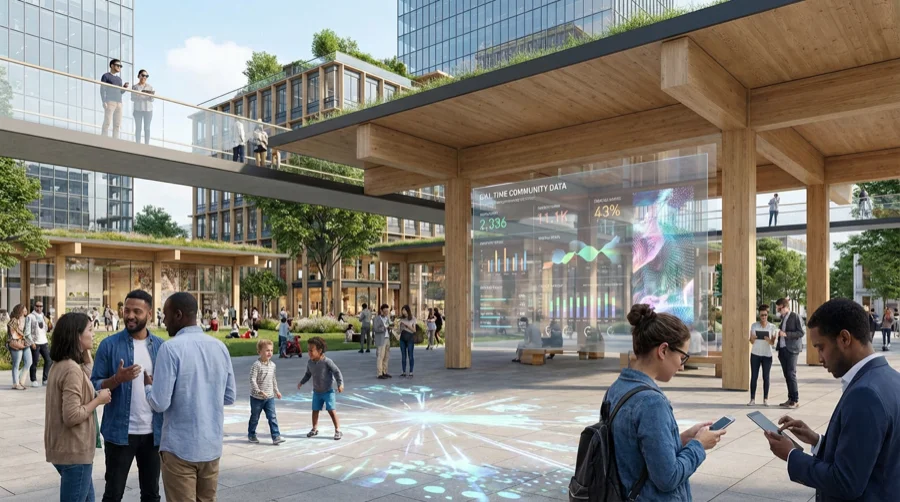
The Erosion of Traditional Community Hubs
For centuries, human communities were anchored by physical, centralized hubs. Town squares, local religious institutions, community centers, and neighborhood markets were the physical spaces where social capital was built. People gathered, exchanged information, and formed the bonds that held society together. However, rapid technological advancement and shifts in modern urban planning have led to the steady erosion of these traditional structures. The convenience of online shopping has diminished the role of the local market, while digital entertainment often replaces community gatherings. As these physical hubs disappear, the structural foundation of how we connect with one another is fundamentally altered. We are no longer guaranteed the casual, daily interactions that naturally build a sense of belonging. This shift requires us to recognize that community is no longer a default setting provided by our geography; it is something that must be actively sought out and deliberately constructed. Understanding this structural erosion is the first step in learning how to adapt to our changing social landscape.
The Rise of Decentralized Digital Networks
As physical community spaces have declined, decentralized digital networks have risen to take their place. Our primary communities are increasingly located on screens rather than streets. We connect with people globally based on hyper-specific interests, professional affiliations, or shared ideologies. This digital shift offers incredible benefits: it allows marginalized individuals to find support, it breaks down geographic barriers, and it provides unprecedented access to diverse perspectives. However, it also changes the very nature of human interaction. Digital communities are often transient and lack the deep, physical accountability of traditional neighborhoods. It is easy to log off and disappear when conflict arises, which can hinder the development of deep, resilient relationships. Adapting to this new structure means learning how to cultivate genuine intimacy within a digital framework. It requires us to develop new rules of etiquette, figure out how to translate online connections into real-world support, and balance the breadth of digital networks with the depth of physical relationships.
The Impact of Remote Work on Social Ties
The widespread adoption of remote work represents one of the most significant structural changes to modern communities. Historically, the workplace served as a primary source of social interaction, providing a structured environment where individuals formed friendships, found mentors, and developed a sense of shared purpose. With the shift to remote or hybrid models, this crucial social infrastructure has been radically altered. While remote work offers unprecedented flexibility and autonomy, it also removes the spontaneous, water-cooler moments that foster connection. Professionals must now put deliberate effort into building relationships with colleagues they may rarely see in person. This requires a new kind of social proactivity—scheduling virtual coffee chats, participating in online team-building, and finding ways to express empathy through digital communication. Furthermore, the absence of a physical workplace means individuals must look elsewhere—to local clubs, hobbies, or digital groups—to fulfill the social needs previously met by the office. Navigating this shift is essential for maintaining mental well-being and professional growth in a dispersed workforce.
Navigating the Fragmentation of Society
As communities become more digital and less geographically bound, society is experiencing a phenomenon of fragmentation. We are increasingly sorting ourselves into highly specialized, homogenous groups where our existing beliefs and lifestyles are constantly reinforced. This sorting effect can create powerful, supportive micro-communities, but it also reduces our exposure to diverse viewpoints and the healthy friction of interacting with people who are different from us. In a traditional neighborhood, you are forced to navigate relationships with people across various political, economic, and cultural spectrums simply because you share a physical space. The fragmentation of modern communities requires us to consciously push against the comfort of our curated bubbles. Adapting to this structure involves intentionally seeking out spaces and conversations that challenge our perspectives. It means recognizing the value of the "loose ties"—the casual acquaintances and diverse neighbors—who provide unexpected insights and prevent us from becoming isolated within our own echo chambers.
Building Resilient Personal Networks
In an era where community structures are rapidly shifting and often unstable, the responsibility for building a supportive social network falls heavily on the individual. We can no longer rely on inherited institutions to provide us with a sense of belonging; we must become the architects of our own communities. Adapting to these changes requires a proactive, intentional approach to relationship building. It means identifying the different types of support you need—emotional, professional, intellectual—and actively seeking out the groups and individuals who can provide it. It involves investing time and energy into maintaining these connections, understanding that relationships require consistent effort to survive in a fragmented world. Building resilient personal networks also means being willing to adapt as your own needs and the structures around you evolve. By embracing the fluidity of modern communities and taking ownership of our social lives, we can forge meaningful, enduring connections that sustain us through the complexities of the modern human experience.