The Cultural Geography of Community
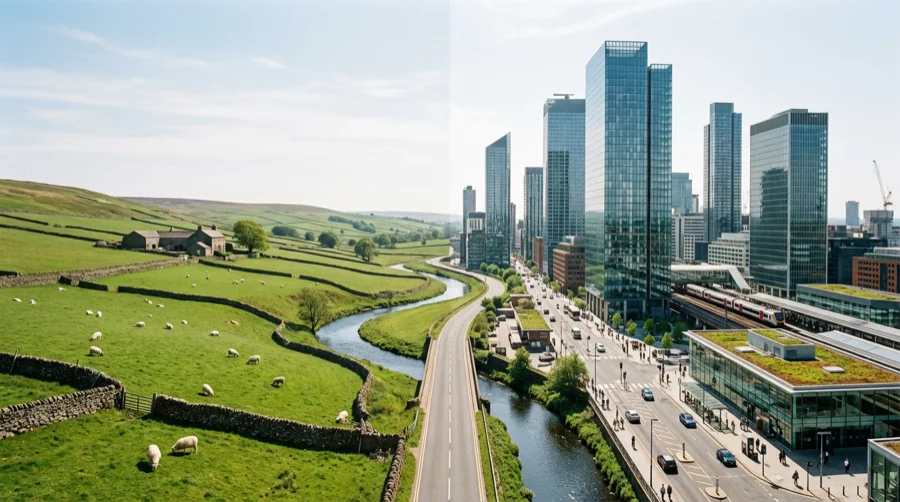
The environment in which we are raised profoundly shapes our understanding of community, privacy, and social obligation. In rural settings, social structures are often characterized by high visibility and deep, multi-generational connections. People generally know their neighbors, and a strong sense of mutual reliance forms the backbone of daily life. An individual's reputation is closely tied to their family history and their tangible contributions to the local ecosystem. Conversely, urban environments are defined by density, transience, and a degree of necessary anonymity. In a city, an individual might pass thousands of strangers in a single day without exchanging a word. The concept of community in an urban center is frequently chosen rather than inherited; it is built around shared professional interests, hobbies, or specific neighborhoods rather than lifelong geographic proximity. Moving from a rural area to an urban center is not simply a change in scenery—it is a transition between two fundamentally different cultural geographies, requiring a complete recalibration of how one navigates social interactions and establishes a sense of belonging.
Redefining Privacy and Personal Space
One of the most immediate shocks when transitioning to an urban mindset is the shifting definition of privacy. In a smaller town, privacy is often physical—having distance between houses and a quiet space to retreat to. However, social privacy can be limited, as community members are highly aware of each other's activities and life events. In a bustling city, the physical space is significantly reduced, with people living in close quarters and sharing crowded public transit. Yet, urbanites enjoy a profound level of social privacy and anonymity. You can reinvent yourself, make mistakes, and pursue niche interests without the watchful eyes of a tight-knit community monitoring your progress. Learning to navigate this new dynamic requires an adjustment period. New city dwellers must learn to find solitude amidst the noise and to build personal boundaries in crowded spaces. They must also learn to appreciate the freedom that comes with urban anonymity, using it as an opportunity for self-discovery and exploration without the weight of historical community expectations.
The Pace of Life and Professional Ambition
The underlying rhythm of daily life contrasts sharply between rural and urban landscapes. Rural communities often operate on a pace dictated by seasons, local traditions, and the requirements of regional industries. There is a specific kind of stability and predictable routine that offers comfort and deep-rooted security. Urban centers, however, pulse with a frantic, relentless energy driven by commerce, innovation, and intense professional competition. When individuals move to a city, they are immediately confronted with a culture that highly values productivity, networking, and rapid career advancement. The definition of success shifts from maintaining community stability to achieving personal and professional milestones. Adapting to this accelerated pace can be exhausting, as the unspoken rule of the city is to constantly be in motion. It requires developing new strategies for time management and stress reduction, as well as figuring out how to build a career in a highly competitive ecosystem where self-promotion is often a necessity rather than a faux pas.
Building Chosen Families in the City
In the absence of the inherited social networks typical of smaller towns, individuals in urban environments must actively construct their own support systems. These "chosen families" are vital for surviving and thriving in a city that can otherwise feel isolating. Building these networks requires intentional effort, as one must seek out groups based on shared values, professional fields, or cultural interests. Unlike rural communities where relationships naturally evolve through proximity and shared history, urban connections are often forged in specific contexts—at industry meetups, local sports clubs, or volunteer organizations. This active curation of a social circle allows individuals to surround themselves with diverse perspectives and specialized support. However, it also demands a level of social proactivity that can be daunting for someone accustomed to a pre-established community structure. Navigating this shift means learning how to be vulnerable with new acquaintances and understanding that urban friendships may serve different, highly specific purposes in one's life.
Reconciling Two Different Worlds
The journey from a rural to an urban mindset is rarely a clean break; it is an ongoing process of reconciliation. Many individuals who make this transition find themselves living with one foot in two different worlds. They value the ambition, diversity, and anonymity of the city, yet they deeply miss the tight-knit support, quietness, and rooted identity of their hometowns. This duality can create a unique internal conflict, where one feels they do not fully belong in either space. The key to successfully navigating this shift is integration rather than replacement. It involves taking the strong values of loyalty and reliability learned in a rural setting and applying them to the chosen communities in the city. It also means bringing the urban lessons of adaptability and open-mindedness back to one's rural roots. By acknowledging the strengths and limitations of both environments, individuals can forge a unique, hybrid mindset that allows them to thrive in complex, fast-paced cities while remaining grounded in the foundational values of their past.